

Få veibeskrivelse
Tekstilindustrisone, East Hutang Town, Wujin-distriktet, 213100 Changzhou, Kina
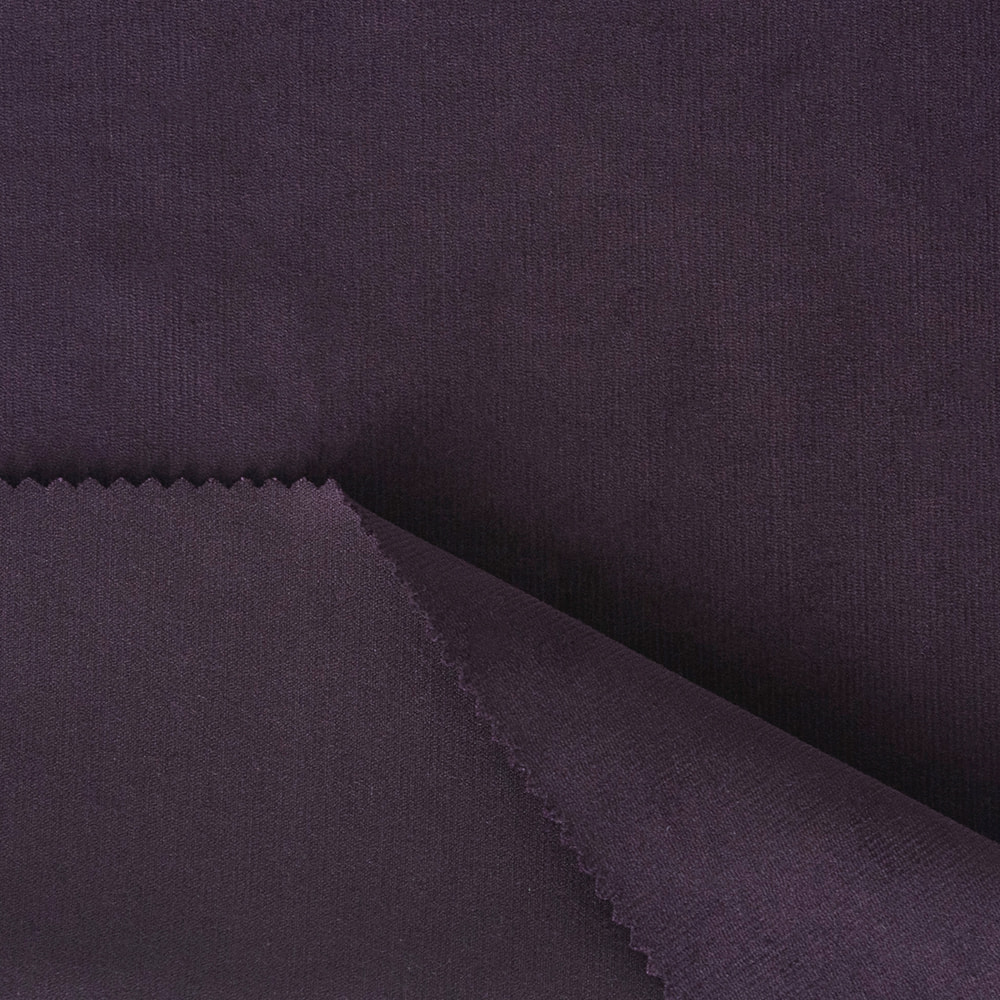
Purple sits in a unique position among corduroy colors. It is bold enough to make a statement, deep enough to carry visual weight, and versatile enough to span a wide range of shades — from pale lavender to near-black aubergine. What makes it particularly interesting is how the ridged pile structure of corduroy amplifies all of these qualities, turning a color that could look flat on a smooth fabric into something with genuine depth and dimension.
For designers and fabric buyers sourcing corduroy in purple, the decisions extend well beyond the color itself. Wale count, fiber composition, and dyeing method all influence how purple finally reads on the finished fabric — and getting those choices right is what separates a rich, striking result from one that looks muddy or faded before it ever reaches the cutting table.
Corduroy's surface is not flat. Each wale — the raised cord that runs vertically along the fabric — creates a small ridge with a peak and a valley. Light hits those two surfaces at different angles, which means the same thread color reads as two slightly different shades simultaneously. On a saturated color like purple, this effect is pronounced: the peaks catch more light and appear brighter, while the valleys appear deeper and more concentrated.
The result is a fabric that appears to shift slightly as it moves — neither a single flat tone nor a print, but something in between. Purple benefits from this more than most colors because the human eye is particularly sensitive to value contrast within violet wavelengths. A purple corduroy jacket does not just look purple; it looks layered, textured, and alive in a way that the same color in a flat woven fabric simply cannot replicate.
This optical behavior also means that the wale count directly affects how intense or subtle the purple appears — a detail that matters enormously when specifying fabric for a particular end use.
Purple is not a single color. Within corduroy, it spans a wide tonal range, and each shade carries different associations and works best in different applications.
When sourcing purple corduroy for production, requesting a physical swatch is strongly recommended regardless of how accurately a color is described. Screen rendering of purple tones is notoriously inconsistent, and the pile direction of the swatch should match the cut direction planned for the final garment.
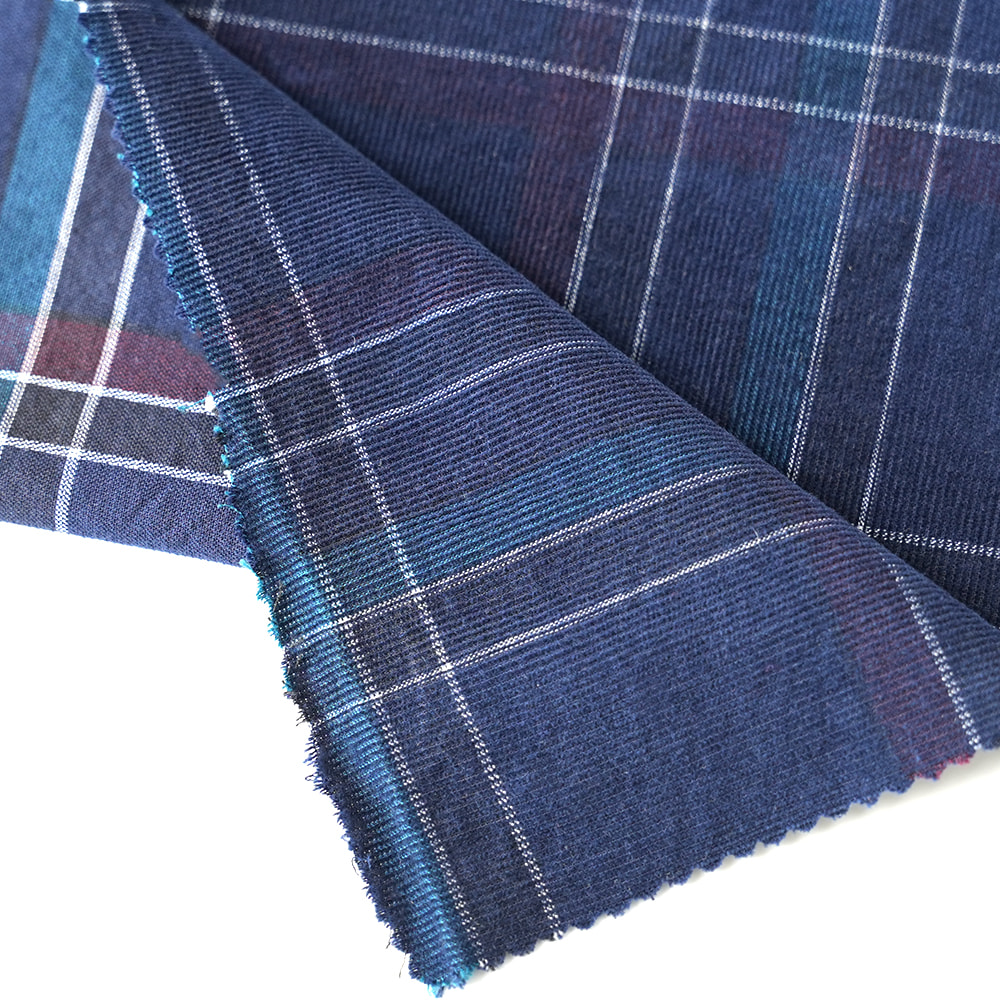
The wale count — measured as the number of ridges per inch — is one of the most consequential specifications when selecting purple corduroy. It affects not only the texture and weight of the fabric but the visual intensity of the color itself.
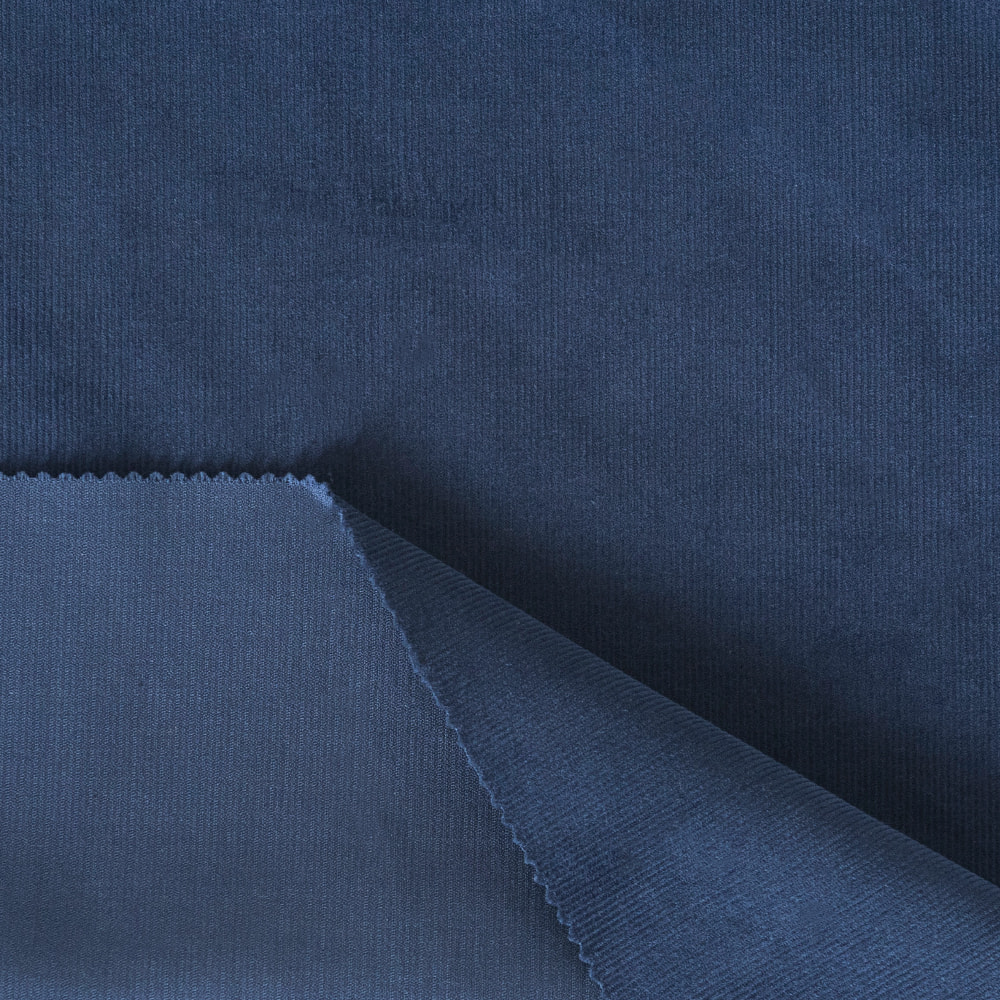
Fine-wale corduroy (16–21 wales per inch) produces a smooth, almost velvety surface where the individual ridges are barely visible at a distance. Purple at this wale count reads as even and refined. The subtle texture adds interest without disrupting the color's continuity, making fine-wale an excellent choice for shirts, blouses, tailored trousers, and children's garments where a softer hand is preferred.
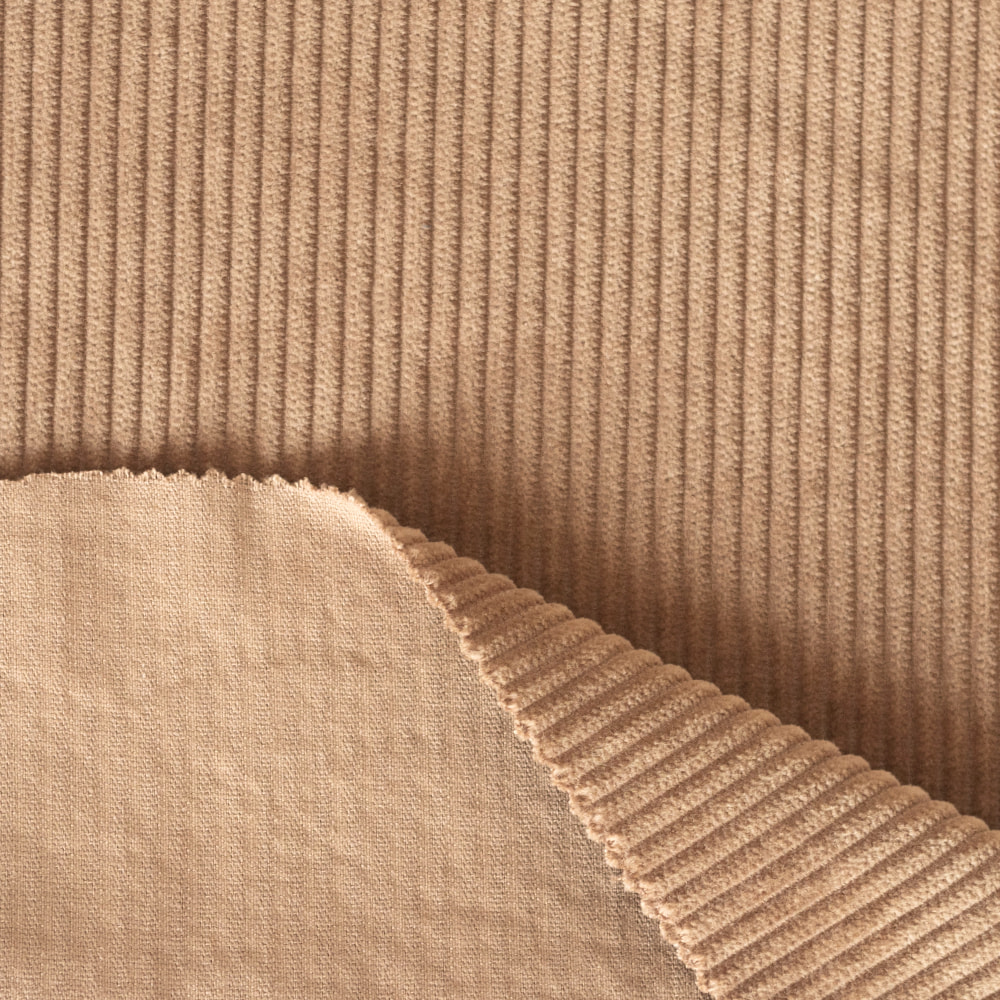
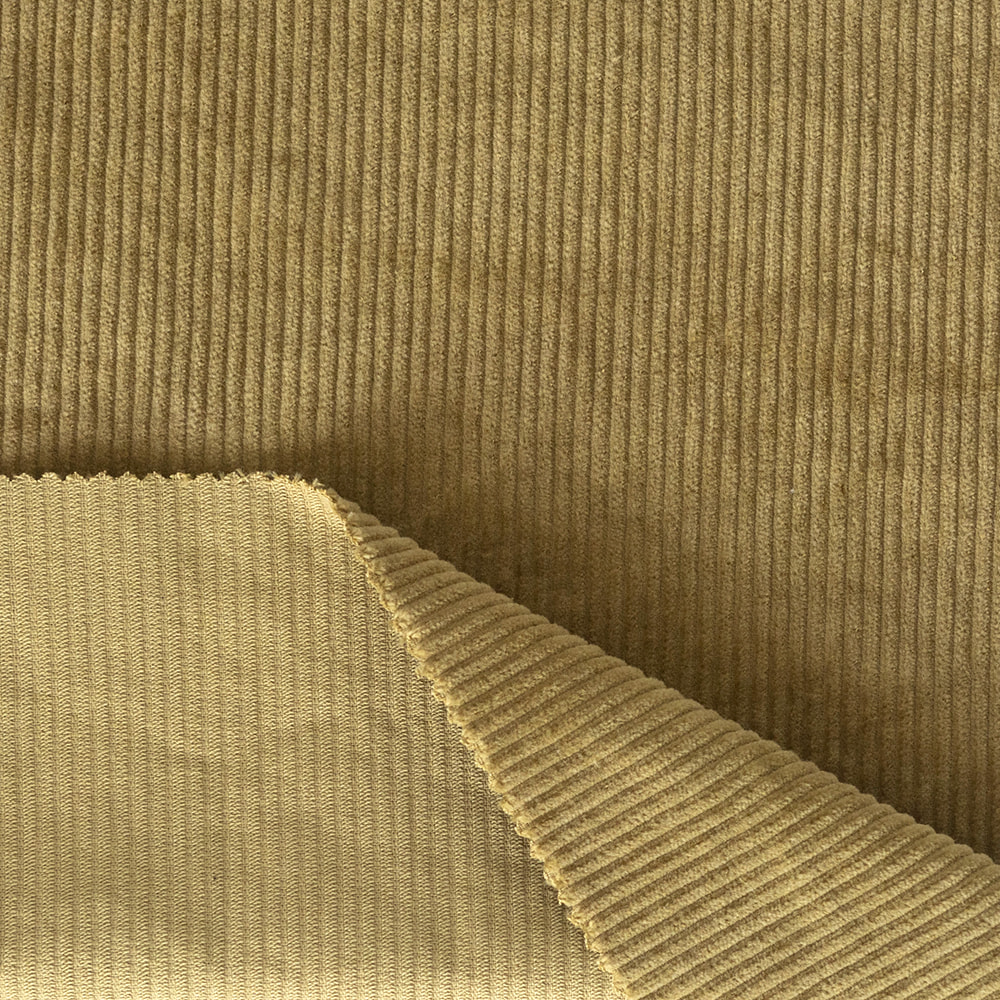
Standard-wale corduroy (10–14 wales per inch) sits in the middle range and is the most commonly used for casualwear. Purple at this wale size shows clear texture and a noticeable light-play effect across the ridges. It works well for jackets, casual pants, skirts, and dresses where some visual structure is desirable.
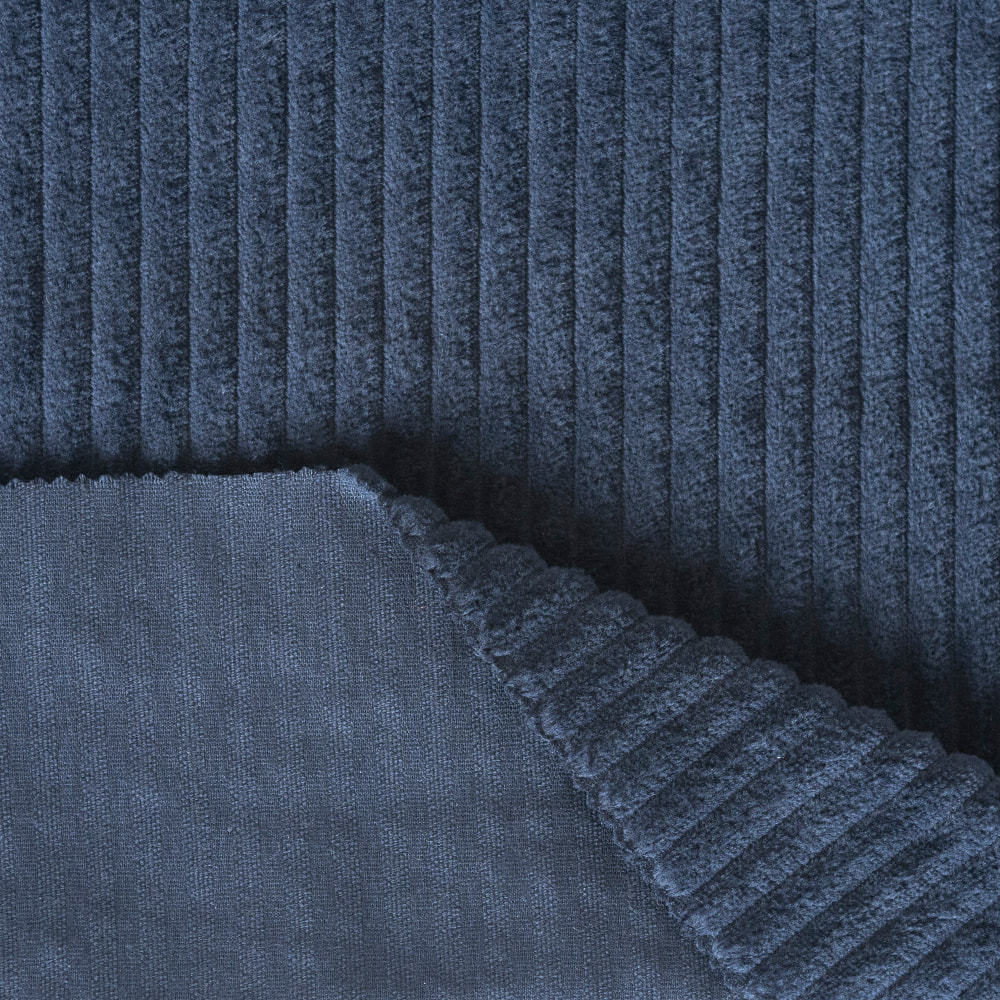
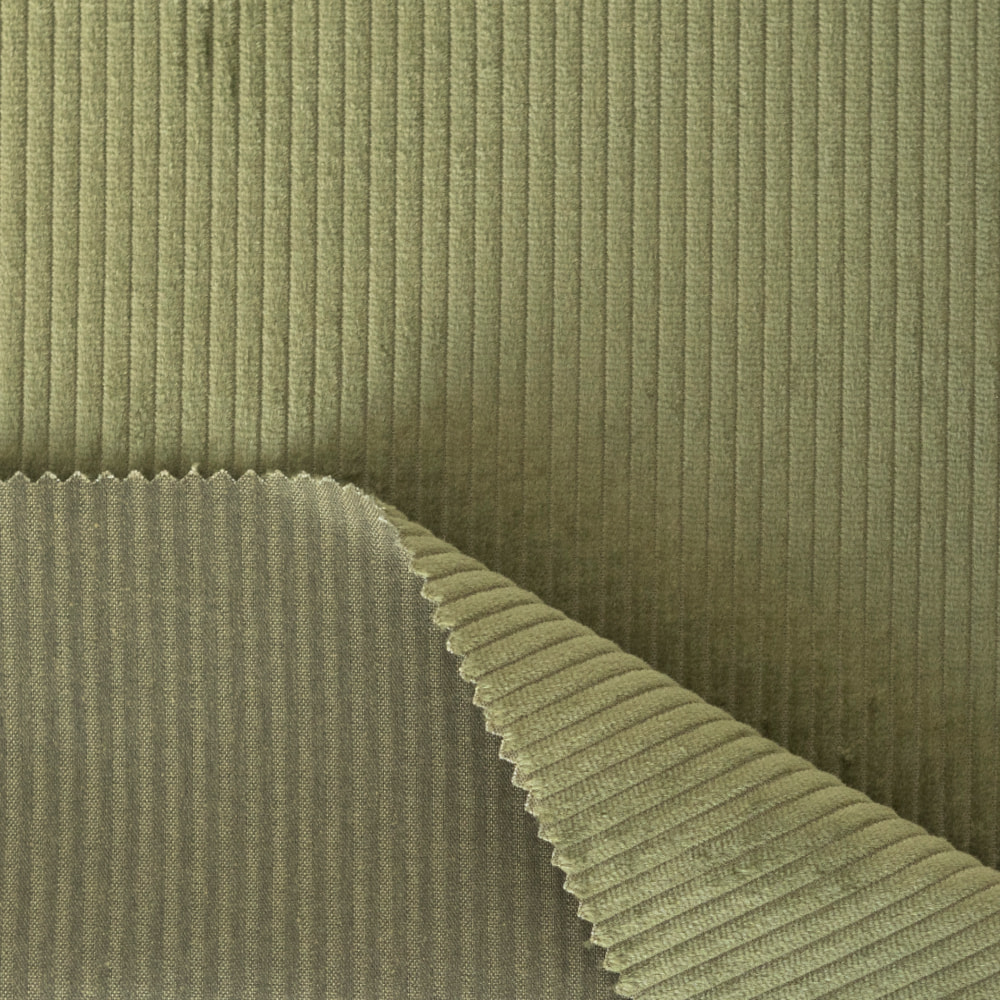
Wide-wale corduroy (6–8 wales per inch) makes the individual cords clearly visible and creates a bold, graphic quality on the fabric surface. Purple at wide wale has significant visual impact — the peaks and valleys create a strong contrast that draws the eye. This is the right choice for statement outerwear, accent furniture pieces, and upholstery applications where the texture itself is part of the design intent.
As a general rule: the lower the wale count, the more dramatic and saturated the purple will appear. The higher the wale count, the more even and refined the color reads.
Fiber content has a direct influence on how purple dye takes to the fabric — and therefore on the final color depth, consistency, and longevity. The main options each come with distinct trade-offs.
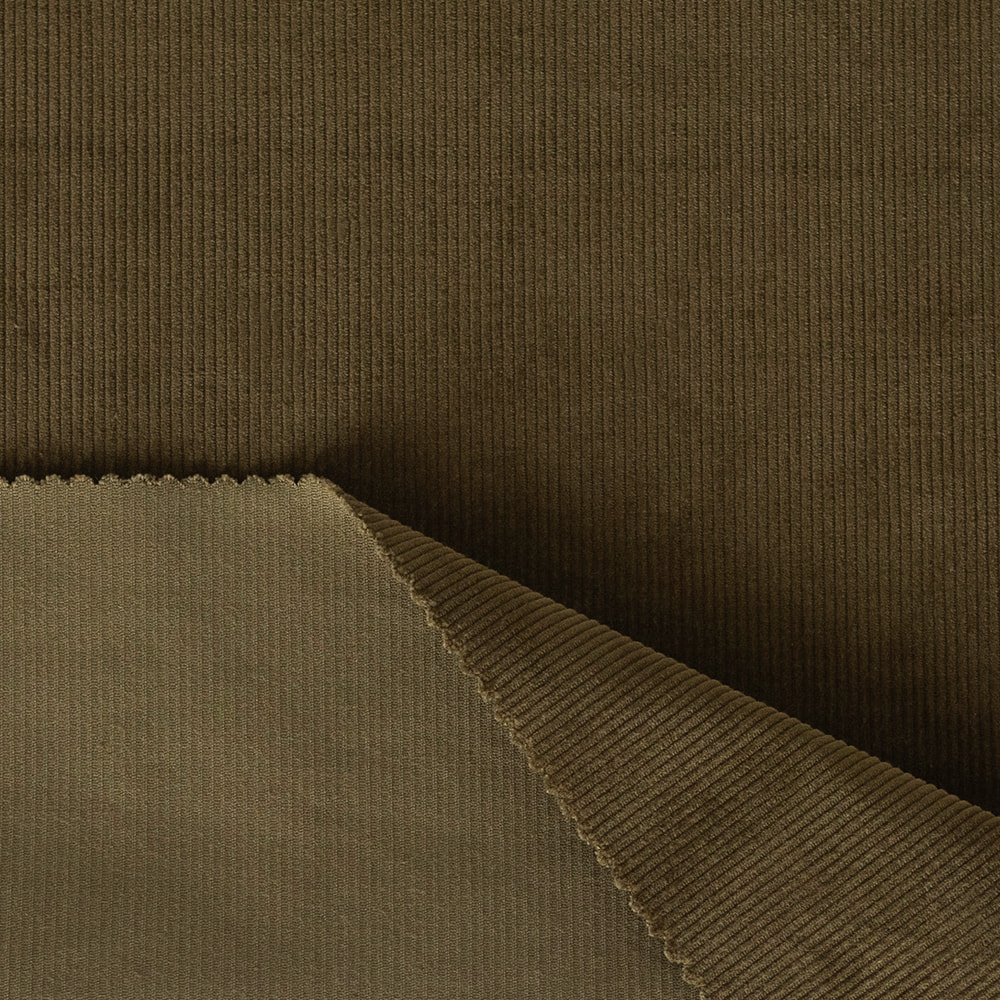
Cotton piece-dyed corduroy is the standard choice for rich, even purple tones. Cotton absorbs reactive dyes deeply and holds saturated colors well over repeated washing. The piece-dyed cotton corduroy fabric available in a full color range is the most widely used base for solid purple colorways across apparel and home textile applications.
Cotton-spandex stretch corduroy adds two-way stretch to the structure without significantly compromising color depth. The elastane content (typically 3–5%) does not dye the same way cotton does, which can slightly reduce the overall color intensity in some shades — but for most purples, the effect is minimal. The stretch cotton-spandex corduroy with excellent color retention is well suited to fitted garments — pants, dresses, and form-following jackets — where recovery and comfort are equally important.
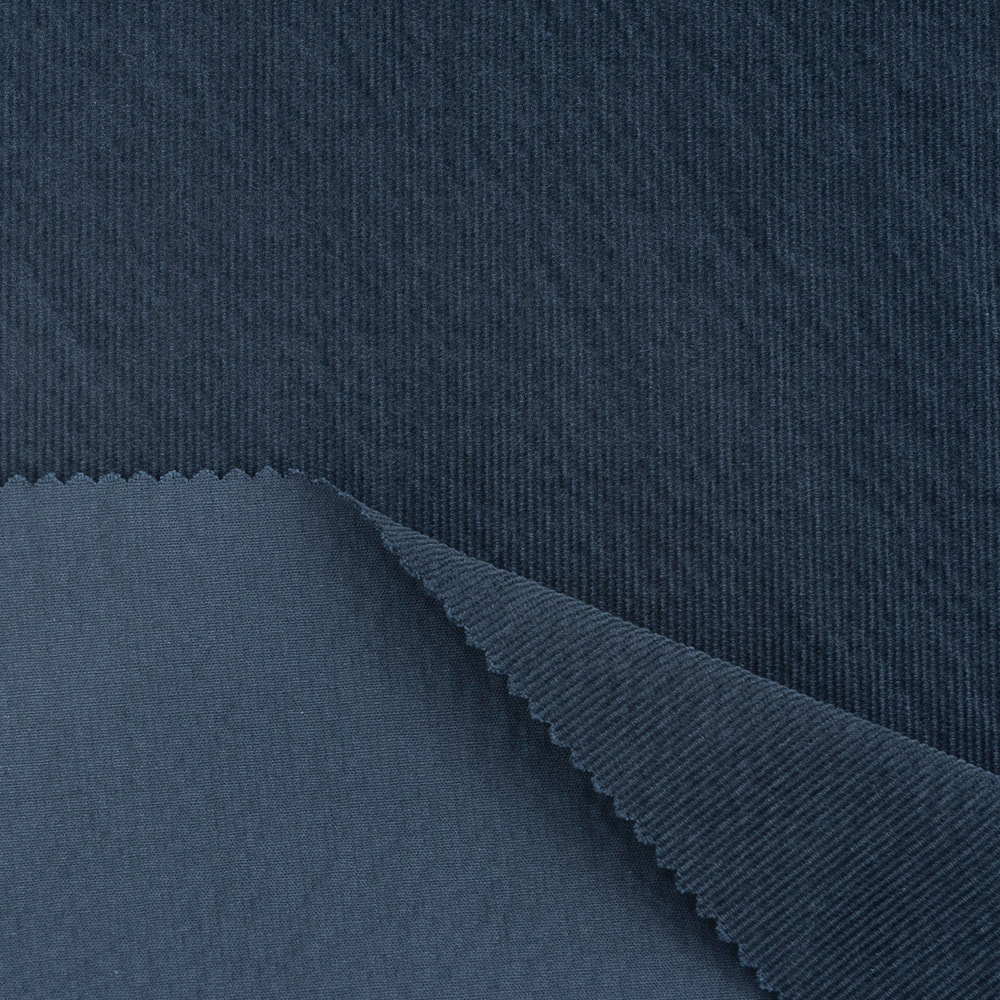
Yarn-dyed corduroy uses fiber that is dyed before weaving, producing a color that runs through the entire yarn rather than sitting on the surface. For purple, this translates to exceptional through-color consistency — the fabric looks the same on both sides, and the color does not fade at the cut edge. The yarn-dyed corduroy fabric for rich, through-color consistency is the preferred specification when color fastness and edge appearance are critical, as in unlined garments or visible raw-edge construction.
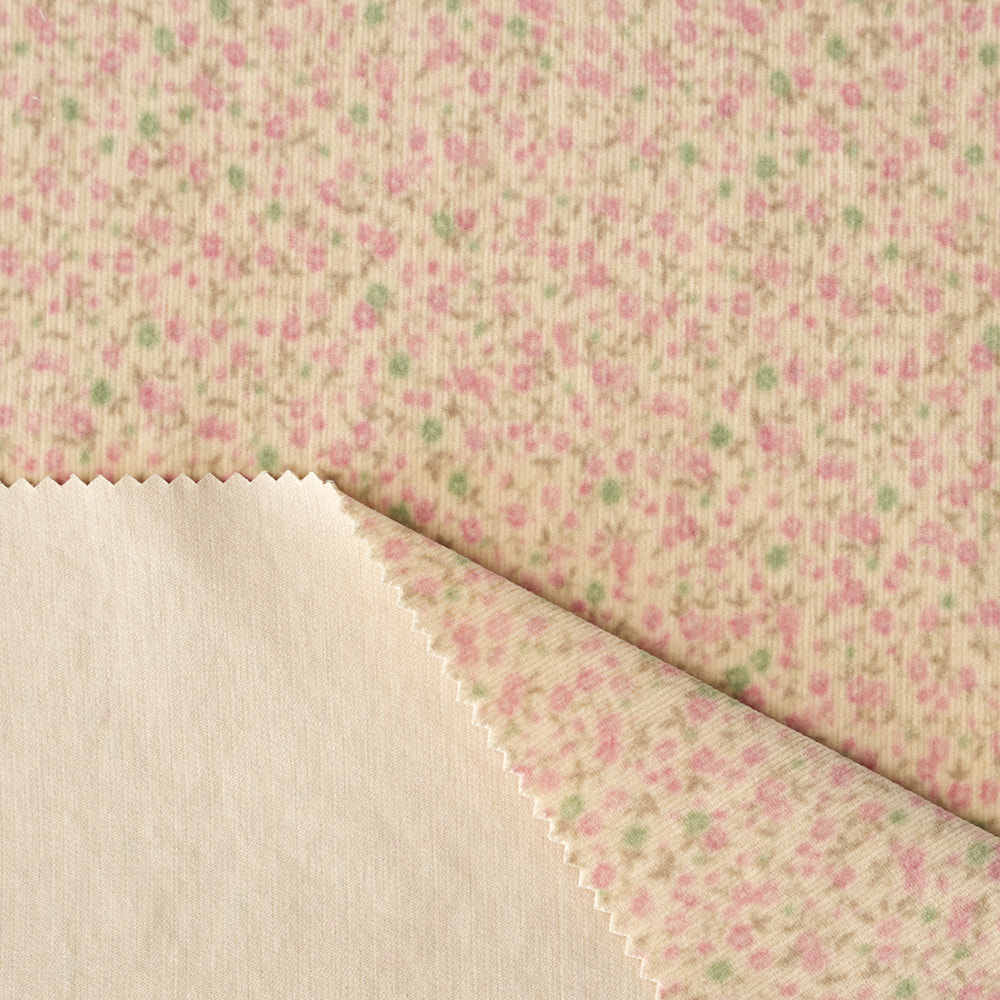
Printed corduroy opens the door to purple in patterns rather than solid colorways — florals, geometrics, and all-over repeats on a corduroy base. The printed corduroy fabric featuring surface pattern options allows designers to incorporate purple as a secondary or accent color within a larger design, rather than committing to a solid ground.
Purple corduroy has a broader range of applications than many buyers initially assume. Its combination of visual richness and structural durability makes it suitable across multiple product categories.
Apparel remains the primary use. Trousers and jackets are the most established applications — purple corduroy trousers occupy a space between casual and smart-casual that few other fabrics can claim, and a purple corduroy jacket is a reliable seasonal statement piece. Skirts, dresses, and shirts benefit from fine-wale constructions, while heavier outer layers typically use standard- or wide-wale corduroy for warmth and structure. The bi-stretch corduroy fabric for fitted and structured garments is particularly relevant here — the four-way stretch allows closer-cut silhouettes that still move comfortably.
Home textiles and upholstery represent a growing application area. Purple corduroy performs well on accent chairs, headboards, ottomans, and cushion covers. Its pile surface adds tactile warmth to interiors, and deep purple tones work especially well in bedroom and living room settings where a richer color palette is desired. For upholstery applications that require heavier weight and additional structural integrity, the double-weave corduroy for heavier outerwear and upholstery use provides the added durability that high-traffic pieces demand.
Accessories — bags, hats, small pouches, and shoe uppers — are well suited to fine-wale purple corduroy. The fabric's manageable weight and clean cut edge make it easy to work with in small-scale construction, and the color makes accessories stand out without requiring additional surface decoration.
Corduroy has a pile direction, and this is non-negotiable when cutting purple — or any solid-color corduroy. All pattern pieces must be cut in the same pile direction, or adjacent panels will reflect light differently and appear as two slightly different shades of purple in the finished garment. The standard practice is to cut with the pile running upward, which produces a deeper, richer color; cutting with the pile downward gives a slightly lighter appearance and more sheen.
A few additional points that affect the quality of the finished piece:
Testing on a swatch before committing to the full cut is always worthwhile — pile direction, stitch tension, and seam finishing all interact differently depending on the specific fabric weight and fiber content.
Purple is among the more demanding colors to maintain in corduroy, particularly at the deeper end of the tonal range. Reactive dyes in deep violet and aubergine shades are prone to bleeding in the first few washes, and high heat accelerates fading. Following correct care procedures from the first wash makes a measurable difference in how long the color stays true.
For upholstery applications, professional cleaning is recommended for deep purple corduroy pieces, particularly on wide-wale constructions where pile flattening from abrasion is more visible. Regular brushing with a soft fabric brush in the pile direction will restore the surface between cleanings.
Ta gjerne kontakt med vår vennlige resepsjonspersonalet med noen generelle ringe oss

+86 139 6116 7127

Email: cloud@jacquardcloth.com

Tekstilindustrisone, East Hutang Town, Wujin-distriktet, 213100 Changzhou, Kina
